Joinery
Custom Fitted Wardrobes
Floor to ceiling, wall to wall. Built around the skirting, the cornice and whatever the last renovator left behind.
See how wardrobes workPotimel is a furniture workshop on Kippax Street in Surry Hills, where six of us build fitted wardrobes and solid timber dining tables for homes across Sydney. We started as two blokes with a borrowed panel saw and a very patient landlord, and we still answer the phone ourselves.
Most of what leaves this building has a person's name on the back of the carcass in chalk. That is not sentiment. It is so we know who to ask when something needs fixing.
The short version of a long story that involves a lot of sawdust, one flooded storeroom and a delivery van that we should have scrapped years before we did.
Potimel opened in 2009 with a single commission: a set of built-in shelves for a terrace in Redfern. The client has since moved twice and taken the shelves both times, which is either a compliment or a warning about how hard they are to remove.
The first three years were mostly kitchens. Kitchens pay the rent, but they also teach you that a lot of joinery problems come down to walls that are not square and floors that slope away from the door. We got very good at scribing, because we had no choice.
By 2014 the work had shifted. People started asking for wardrobes that used the full height of a room, and dining tables they could hand down. Those two things turned out to be the parts of the trade we actually cared about, so we narrowed the range and stopped bidding on kitchens. It was a nervous decision and the right one.
Today the shop runs to about 240 square metres. There is a spray booth, a proper template bench and a wall of clamps that has grown every year since 2011. The bench nearest the roller door still belongs to the first person we hired, mostly because nobody has been brave enough to suggest otherwise.
There is no account manager and no call centre. These are the people who measure your room, draw the job and cut the timber.

Started the shop in 2009 and still does most of the site measures. Trained in joinery in Dublin before the travel bug brought him to Sydney in 2006. Has strong opinions about drawer runners and will share them.
Runs the schedule, the material orders and the paperwork nobody else wants to touch. If your job is running late, she is the one who will ring to tell you before you have to ask. Fifteen years in commercial joinery before she joined us.

Our first hire, back in 2011, and the reason the install days go smoothly. Knows how to get a 2.9 m carcass up a narrow Paddington staircase without taking a corner off. Builds the dining tables with Tomas.

Turns a rough sketch and a room photo into a scaled drawing you can actually argue with. Spends a lot of time asking what you own rather than what you would like to own. Joined in 2019 after a decade in retail fit-outs.
A drawing made from photos is a guess. Somebody from the shop stands in the space with a laser and a template board before anything is ordered. Walls lean, cornices are not level and the pipe is never where the plan says it is.
Once you have signed off on the drawing, the number does not move. If we underestimated the material or took too long in the shop, that cost sits with us. Variations you ask for later are quoted separately and in writing.
Screws you can reach, hardware we can still source in ten years, and joints that come apart on purpose instead of splitting. A wardrobe that cannot be fixed is a wardrobe with a short life, whatever it cost.
Nothing dramatic. Just the totals that built up while we were busy doing the work.
Photographed on install day, usually with a toolbox still on the floor.
Floor to ceiling, wall to wall. Built around the skirting, the cornice and whatever the last renovator left behind.
See how wardrobes work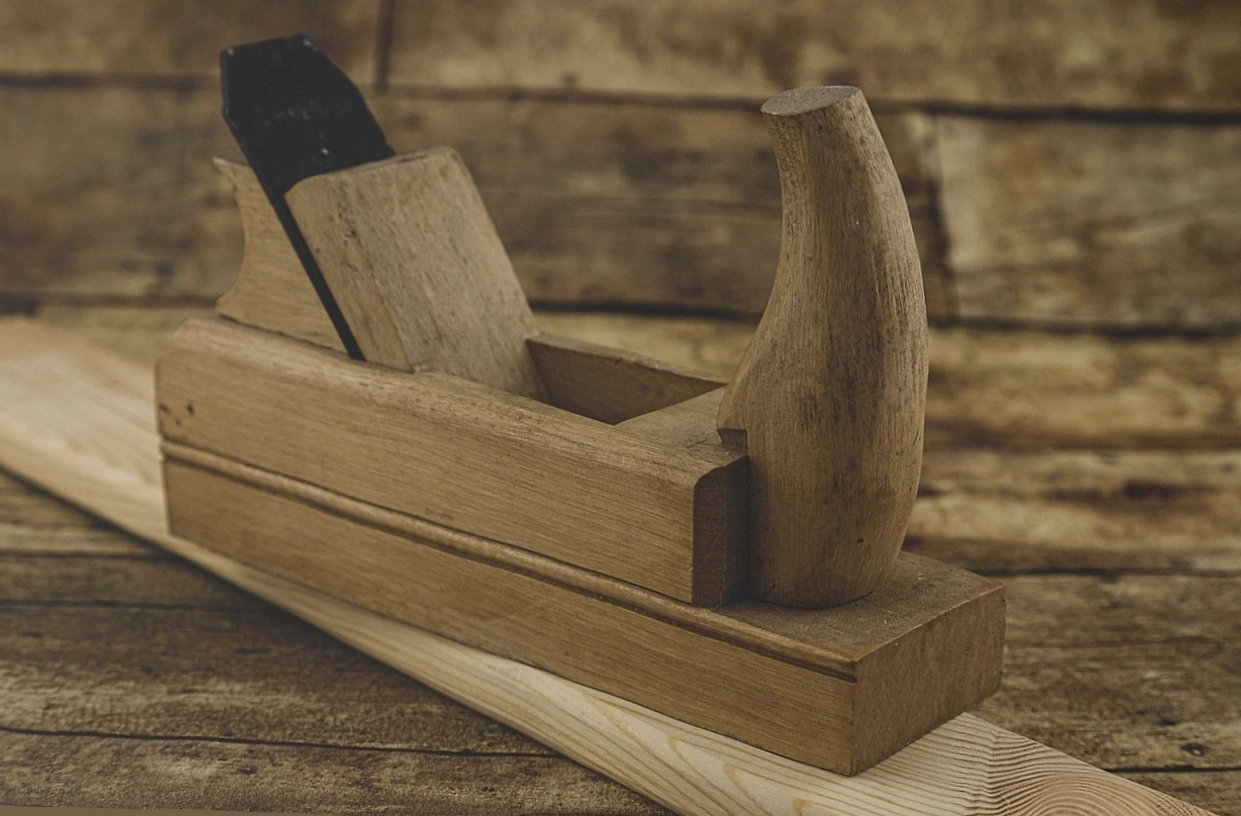
Boards picked by hand, sized to the room, and finished so you can repair a scratch instead of hiding it under a cloth.
See how tables workWe are two blocks from Central Station on the Surry Hills side of Kippax Street. Ring first and someone will be free to talk instead of mid-cut with earmuffs on.
People often ask what happens if they change their mind halfway through. The answer is that we would rather stop and redraw than build something you will resent every morning. It costs less for both of us in the long run.